

Texans Cornerback's Emotional Outburst: A Lesson in Sportsmanship
Kansas City, Mo. — The Houston Texans’ divisional playoff match against the Kansas City Chiefs turned out to be as intense on the sidelines as it was on the field. In a dramatic moment during the opening kickoff, cornerback Kris Boyd found himself caught up in the excitement, resulting in an outburst with the Texans’ special teams coach, Frank Ross.
A Rollercoaster of Emotions 🎢
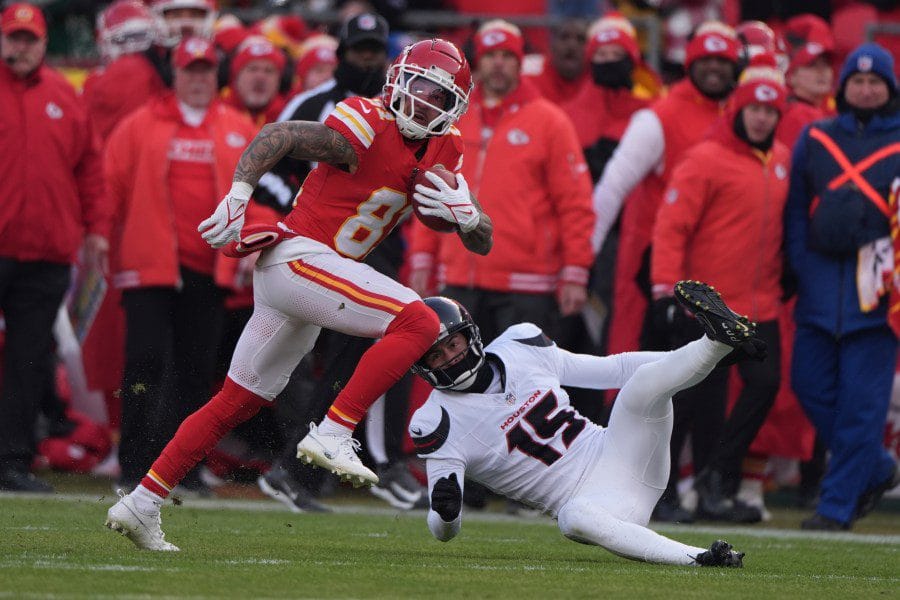
The game had just begun when the Texans kicked off to the Chiefs. Returner Nikko Remigio broke through the coverage and sprinted down the field, seemingly heading towards a touchdown. In a last-ditch effort, Boyd made a critical play, catching up to Remigio and forcing a fumble. As he sprinted towards the Texans’ sideline, jubilant with his accomplishment, he ripped off his helmet and celebrated in dramatic fashion.
However, the euphoria was short-lived. To his dismay, the Chiefs recovered the fumble, leaving Boyd hanging in disbelief.
"I got the ball out," Boyd reflected after the game. "And as I’m getting up, I look at the screen, I see nothing but white, and they’re all pointing that way. So I was like, ‘Oh yeah, we got the ball, too. Turnover.’ And I was just turnt."
The twist of fate left him feeling jubilant but quickly faded as a teammate informed him of the penalty flag on the field, which overshadowed his moment of triumph. The Chiefs maintained possession, and it wasn’t long before Boyd's enthusiasm led him to shove Coach Ross on the sideline—a decision that would warrant a penalty for unsportsmanlike conduct.
Learning from Mistakes 📝
In his post-game remarks, Boyd acknowledged the impulsivity of his actions.
"I was just too excited, did something that I shouldn’t have done. Learning from it," he explained, emphasizing his commitment to keeping his helmet on during high-stakes moments in the future.
Despite the emotional display, Boyd expressed that such actions are out of character for him. He affirmed his respect for every individual on the team, including Coach Ross.
"I love Frank," he said. "I'm a God-fearing man. I respect everybody in that building."
Boyd took the time to apologize to the team and especially to Coach Ross for allowing his emotions to cloud his judgment during a critical moment of the game.
"He told me, ‘Hey, listen, don’t worry about that,’” Boyd recalled. “We had a whole ballgame to play, but I was just trying to get my point across. Like I said, I'm not that type of person.”
Coaching Responsibilities 🚀
Coach DeMeco Ryans, while acknowledging the intensity of the game, also pointed out the importance of maintaining composure, especially during significant plays. He didn’t witness the incident between Boyd and Ross but commented on the implications of such an outburst.
“What I saw is we can’t come out on the first play and throw our helmet. That’s not what we teach. That’s not what we’re about at all," Ryans stated, emphasizing the need for discipline and focus, even amidst the heightened emotions of a playoff game.
Ryans’ comments highlight a critical aspect of coaching: guiding players through emotional highs and lows while maintaining team spirit and cohesion.
The Road Ahead for the Texans 🚦
This incident not only provides insight into Boyd’s passionate character but also serves as a reminder of the challenges faced in high-pressure scenarios. The Texans will need to channel this intense emotion constructively as they continue their journey in the playoffs.
Teams often face critical moments where tempers flare and excitement peaks; it’s crucial that players learn to manage these feelings, channeling them into positive performance on the field rather than letting them spill over into unsportsmanlike actions.
As they prepare for the next game, Boyd and the Texans must focus on teamwork, discipline, and maintaining enthusiasm without crossing the line into disrespect.
Conclusion: Emotions and Sportsmanship 🤝
In sports, emotions run high, especially during pivotal moments like playoff games. While it’s natural to feel a surge of excitement or frustration, understanding how to manage these emotions is integral to a player’s growth and maturity. This incident with Boyd illustrates the balance athletes must strike between passion and professionalism.
As the playoffs progress, every player should take Boyd’s experience to heart, using it as a stepping stone towards becoming a better teammate. By doing so, they not only enhance their own performance but also contribute positively to the team dynamic.
Overall, the journey through competitive sports is as much about personal growth and learning how to navigate complexities as it is about winning games. The Texans have a valuable lesson in emotional intelligence and the importance of sportsmanship as they move forward in their quest for playoff success.