

Carl’s Jr. Sparks Controversy with New Super Bowl Ad 🎥🍔
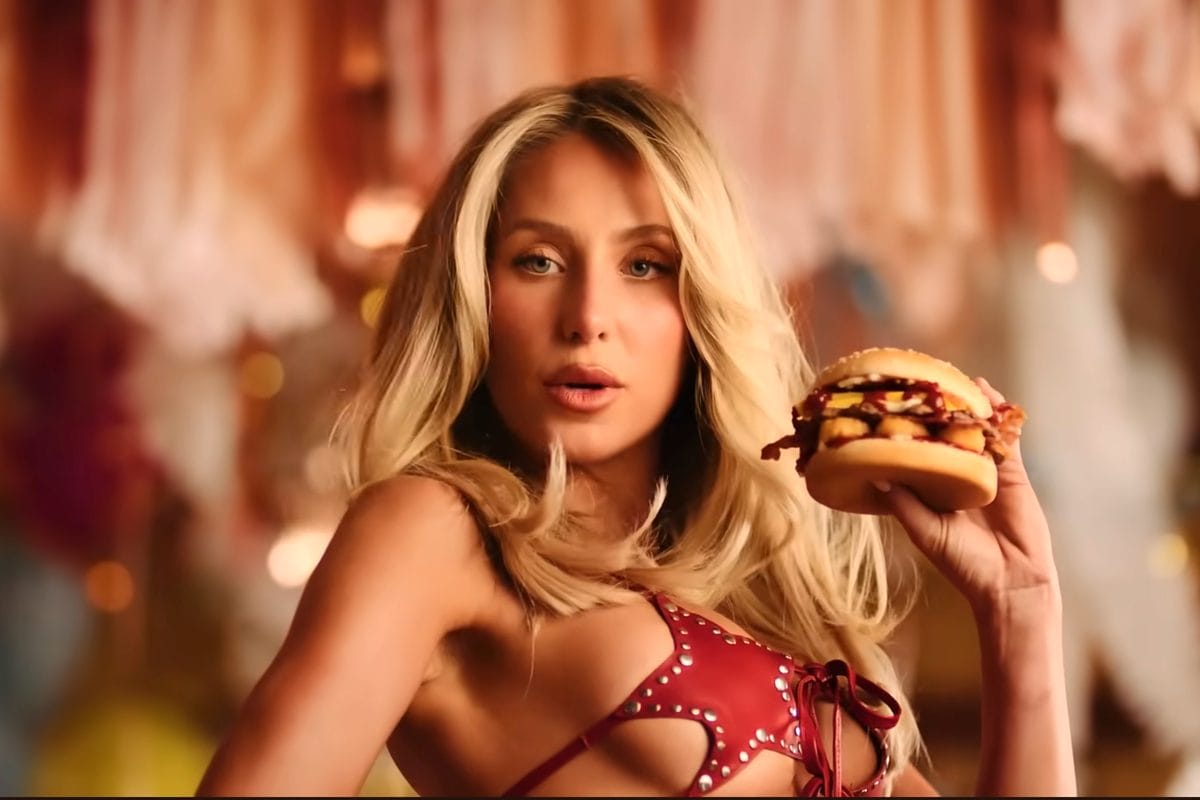
Carl’s Jr. has once again found itself in the spotlight, this time for its latest Super Bowl advertisement featuring popular influencer Alix Earle. The ad has ignited discussions around its provocative content, leading TV watchdogs to equate it with “softcore porn.” As the fast-food chain launches a promotion for its “hangover burger” following the Super Bowl matchup between the Kansas City Chiefs and the Philadelphia Eagles, the marketing strategy has drawn both criticism and intrigue. Let’s dive deeper into the details!
The Ad and Its Reception
In the commercial, released just days prior to the big game on February 7, Earle, who is known for her hit podcast Hot Mess, is depicted walking through the remnants of an exuberant tailgate party. She is dressed in a striking red star bikini top, a low-waisted mini skirt, and eye-catching knee-high snake print boots. With playful enthusiasm, she quips, “Let’s be real; everyone is going to be a hot mess after the game. Been there, done that. I’ve got just what you need to cure that post-party bug.” This sets the stage for the unveiling of the so-called hangover burger—a hearty concoction loaded with eggs, double bacon, hash browns, charred beef, ketchup, and special sauce—while Earle takes a dramatic slow-motion bite.
A Return to Provocative Marketing? 🍔👙
This advertisement signals a return to Carl’s Jr.'s previous marketing strategies that often featured sexy imagery and scantily clad women. The brand famously showcased celebrities like Kim Kardashian and Paris Hilton in raunchy scenarios, such as Kardashian eating a salad in a bathtub or Hilton washing herself with a sponge next to a car. These memorable ads became a hallmark of Carl’s Jr.’s identity, but following a brief era of more family-friendly marketing, the company seems to be reinvigorating its racy image.
Brad Haley, the former Chief Marketing Officer at CKE Restaurants (the parent company of Carl’s Jr.), remarked back in 2017 that the brand had shifted focus to highlight menu quality. This change came after considerable feedback regarding its earlier, risqué marketing approach, which many felt did not resonate with a family-oriented audience.
Criticism from Guardians of Media Standards 🚨
The Parents Television and Media Council (PTC) has publicly condemned Carl's Jr. for using what they deem sexually suggestive imagery in this new advertisement. PTC Vice President Melissa Henson remarked, “Using ‘softcore porn’ to sell burgers was Carl’s Jr.’s previous strategy years ago — and one we called out."
Henson further dug into the past, noting, “In 2017, the company appeared to have a change of heart, wisely realizing that strategy was ‘distracting’.” The organization feels that Carl's Jr. has regressed rather than progressed by reviving this controversial element of its advertising, which risked alienating parts of its customer base.
Analyzing the Shift in Advertising Culture 🔍
Tim Calkins, a marketing professor at Northwestern University, offered insights into why Carl’s Jr. may feel emboldened to revisit its bold marketing styles. He suggested the ad reflects a broader societal shift influenced by cultural and political dynamics. Calkins stated, “Clearly with the new administration… what is acceptable conduct is changing,” pointing out that brands are frequently adapting to align with the prevailing mood of the country.
This trend seems particularly pronounced in the context of the Super Bowl, where advertisers are expected to push boundaries. Super Bowl LIX has seen companies shell out an average of approximately $8 million for 30-second spots, a noticeable increase from the $7 million charged during the previous year’s Super Bowl.
A Balancing Act in Advertising 🎭
As the debate over acceptable advertising tactics continues, Carl’s Jr. finds itself at a crossroads. While provocative advertising can garner attention and spark conversation, it can also draw backlash and alienate potential customers. In the age of social media, where public perception can shift rapidly, brands are navigating a complex landscape that demands both creativity and sensibility.
Earle’s ad aims to capture the fun, chaotic spirit of post-game revelry while promoting a product that appeals directly to this audience. However, the enduring question remains: at what cost does this approach come? Balancing entertainment value and marketability with social sensitivities is an issue that many brands must grapple with in today’s climate.
Conclusion: Marketing in 2023 and Beyond 🌟
As brands like Carl’s Jr. revisit shock-value advertising, they must tread carefully to avoid the pitfalls of past strategies that once put them in hot water. The effectiveness of racy ads in today’s evolving social landscape remains to be seen.
Whether audiences embrace this comeback or view it as a misguided step back into controversy will ultimately shape the future of not just Carl’s Jr., but the wider advertising industry. The unfolding narrative surrounding influencer culture, societal standards, and marketing tactics highlights the delicate interplay of creativity, customer connection, and societal norms that will define 2023 and beyond. 🍔💡
So, what do you think? Is provocative marketing a thing of the past, or is it here to stay?