

Kansas City Chiefs: Analyzing Early Shortcomings in Super Bowl LIX
Fans of the Kansas City Chiefs have witnessed a remarkable trend: the team often battles back from early deficits to secure impressive comebacks, especially under the leadership of quarterback Patrick Mahomes. However, during Super Bowl LIX, a daunting challenge emerged, as the Chiefs fell into a significant hole early on. This situation was reminiscent of past Super Bowl victories, where similar setbacks occurred, but this time, the circumstances felt overwhelmingly heavy.
A Rocky Start
The Philadelphia Eagles launched their offensive attack with vigor, establishing a 10-0, then 17-0, and finally a staggering 24-0 lead by the end of the first half. What began as a few missed opportunities quickly devolved into a full-blown disaster, showcasing a series of misfortunes from some of the Chiefs' most dependable players.
Struggling Against Zone Coverage
In the opening plays of the game, it looked like the Chiefs were ready to take advantage of the Eagles' zone-heavy defense. The initial two plays were quick passes aimed at stretching the defense, but what transpired was anything but smooth.
On a crucial second-and-9 situation, the Chiefs attempted to spread out the Eagles' defenders, positioning tight end Travis Kelce strategically to exploit gaps in the coverage. However, the pass from Mahomes arrived late and fell harmlessly to the ground, demonstrating how challenging it can be to navigate aggressive zone defenders.
In a later drive, the Chiefs again relied on an established play designed to defeat zone coverage. This time, they aimed to utilize the flat route to open up space for Kelce. Yet again, the ball missed the mark, hitting the ground instead of Kelce's hands. Mahomes, trusting his reads, might have expected Kelce to find a more favorable position, but the execution simply wasn’t there.
It became evident that the Eagles had devised a plan to keep Mahomes' passing windows tightly congested throughout the game. With seven or eight players consistently dropping into coverage, the Chiefs struggled to find any rhythm.
Running Game Woes
One effective counter to a zone-heavy defense is a reliable running game. The Chiefs' strategy was designed to integrate both the run and pass effectively, giving Mahomes the freedom to maneuver based on defensive formations.
However, in the early drives, it became apparent that the team had opportunities to establish the run but opted for passing instead. An early completion resulted in minimal yardage when a well-executed run play would have gained more. The run schemes were present, but the offensive focus stayed heavily skewed toward the passing game.
As the game progressed, the Chiefs attempted to drive using run-pass options (RPOs), but the results were underwhelming. Kansas City’s first rush attempt came with a well-crafted play design that should have opened lanes for the running back. Yet, miscommunication led to a minimal gain, underscoring the urgency for a more defined running attack.
Pass Protection Breakdown
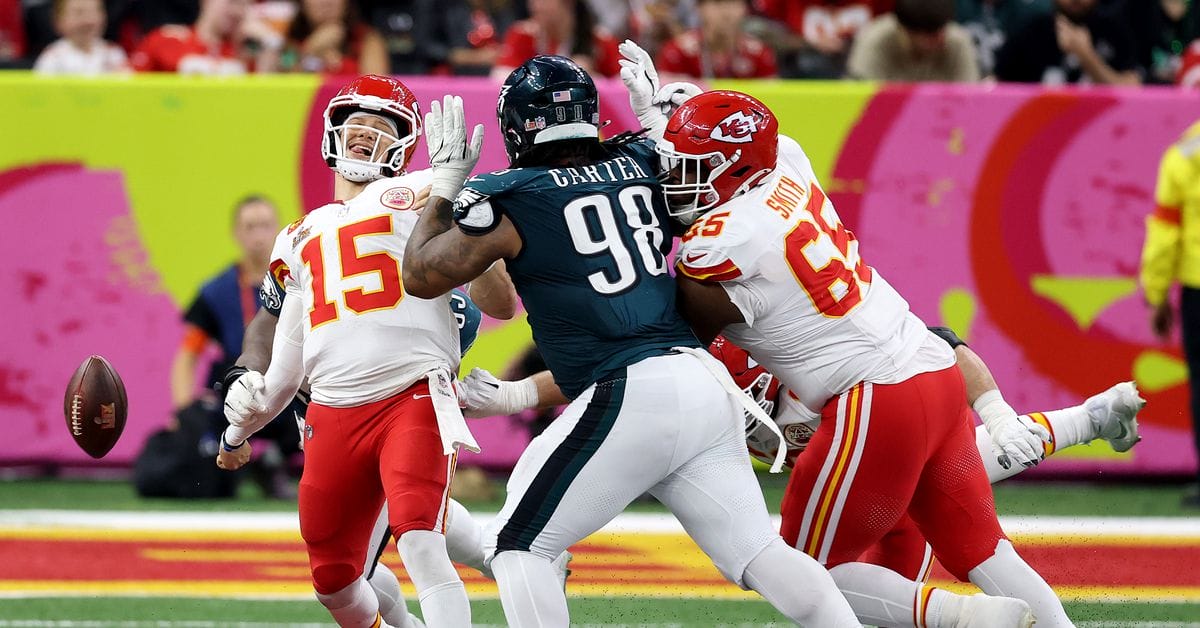
The Chiefs’ offensive line faced tremendous pressure, as evidenced by the three sacks and numerous quarterback hits they allowed in the first half alone. Even when Kansas City employed an extra blocker, they struggled to contain the Eagles' front.
On one passing play designed to create a deep throw, the Chiefs attempted to use strategic misdirection. However, execution faltered when crucial players, like Kelce, failed to effectively engage their assignments. As a result, pressure reached Mahomes quickly, resulting in hurried throws and a lack of successful connections downfield.
Even more concerning was a play where the Chiefs maintained seven players in protection but still allowed the pocket to collapse. A missed assignment left Mahomes vulnerable, leading to a pivotal interception returned for a touchdown, driving the Eagles' lead to 17-0.
The Aftermath of Mistakes
These early miscues weighed heavily on the Chiefs, significantly impacting Mahomes' performance. As the game wore on, he appeared increasingly uneasy, hesitant to release the ball even when opportunities presented themselves. The Eagles’ defensive scheme executed flawlessly, maintaining a relentless approach that stifled any offensive momentum.
As the first half came to a close, the Chiefs found themselves entrenched in a deep hole. The errors in execution compounded, making it increasingly more challenging to mount a comeback. With opportunities to regain their footing, the mounting frustration and sense of pressure took center stage.
Conclusion
The Chiefs had their share of chances to right the ship after the dreadful first half. However, the combination of missed opportunities, ineffective offensive strategies, and a dominant Eagles defense proved too much to overcome.
As Mahomes and his team look to bounce back, the need for adaptability in both execution and strategy becomes paramount. Learning from these challenges can pave the way for future success, but the lessons from this Super Bowl will resonate for players and fans alike. 🏈✨
Reflecting on the game, it’s clear that the Chiefs have a journey ahead, focusing not just on the skills of its players, but on how to adjust under pressure, maintain composure, and unleash their formidable talent moving forward. 🌟