
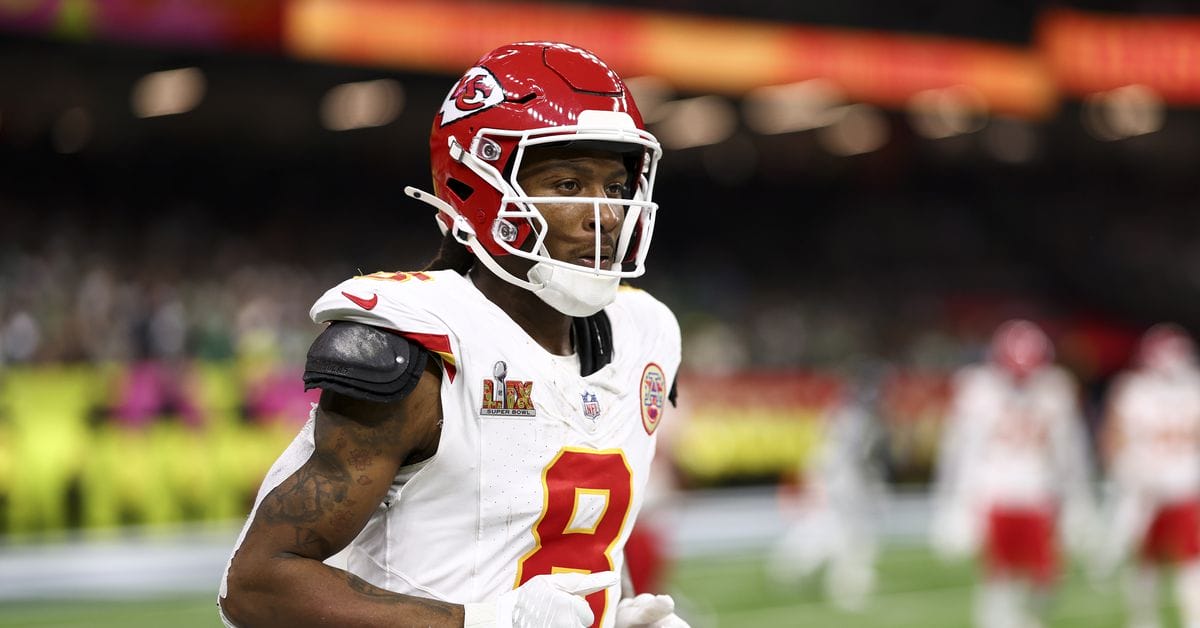

Analyzing the Chiefs' Offensive Struggles in the Super Bowl 🏈
The Super Bowl revealed several issues within the Chiefs' offense, starting predominantly with their offensive line's inability to protect against a standard four-man rush. The Philadelphia Eagles relied solely on their front four throughout the game, opting not to send any blitzes, and their decision paid off in spades.
Offensive Line Woes 👎
The Eagles executed their strategy effectively, creating pressure from various angles. Both tackles found themselves continuously pushed back into the pocket, with Mike Caliendo struggling against Milton Williams's speed, while Jalen Carter exploited Trey Smith. This relentless pressure made it difficult for Patrick Mahomes to find any comfort in the pocket, ultimately affecting his passing mechanics and footwork.
However, while the protection issues were significant, it became clear that there were more layers to the Chiefs' offensive struggles. For a deeper understanding, I revisited the All-22 game film to analyze the passing coverage and its impact on the game.
Unpacking the Eagles’ Defensive Strategy 📊
The Eagles employed a straightforward coverage scheme, favoring zone shells, particularly a Cover 4 alignment throughout the game. Cover 4 effectively divides the field into four quarters, allowing defenders to match routes and limit explosive plays. Although this scheme has its vulnerabilities—like quick throws to the outside or advantageous matchups with linebackers against wide receivers—this particular chess match didn’t see many significant openings.
Defensive coordinator Vic Fangio's philosophy seemingly revolves around conceding shorter, methodical drives while betting that his front four can win quickly enough or force a mistake—an ideal scenario for any defense. In the Super Bowl, the Chiefs' offensive line struggles exacerbated their issues in maintaining offensive consistency.
The Chiefs' Counterproductive Response 🚷
The Chiefs found it challenging to adapt to the Eagles' defensive game plan, but one specific variation of Cover 4 stood out. When the offense aligned in a 3-by-1 or 4-by-1 formation, the Eagles' defense utilized a “poach” call. This defensive call allowed the backside safety to shift his focus toward the stronger side of the formation, effectively neutralizing potential threats from deep crossers or post routes. With this approach, defenders can outnumber receivers, creating a significant challenge for the offense.
In essence, the Eagles cleverly employed this strategy, leaving their cornerback isolated on the other side with no safety help. If a wide receiver could win that one-on-one battle, it would force the Eagles out of their poach coverage, shifting to a more traditional approach.
A Lost Opportunity
Unfortunately, the Chiefs could not capitalize on these opportunities; too often, their receivers failed to create separation. This lack of offensive execution left Mahomes searching for open targets on the frontside, where the Eagles, with their six defenders concentrated on that side, effectively compressed the available space. This struggle in execution also impacted star tight end Travis Kelce, who faced multiple defenders whenever he attempted to find soft spots in the zone coverage.
Moving Forward: The Chiefs' Wide Receiver Dilemma 🔄
Every team does not possess the same depth at defensive coverage as the Eagles; however, other teams will likely replicate this effective game plan. The Chiefs must take steps to counteract such defensive strategies in the upcoming seasons.
The Need for a Difference-Maker
To reestablish a viable offensive threat, it is crucial for the Chiefs to find a wide receiver capable of winning those one-on-one matchups. Mahomes needs to gain confidence in his receivers' ability to separate and successfully defeat coverages that are essentially designed to mimic man-to-man. By doing so, he can reliably target this player, driving defenses to reconsider their coverage strategies.
While there was hope that DeAndre Hopkins could fill this role, his inability to consistently separate from defenders and lack of top-end speed have made him less effective than anticipated. On the other hand, Travis Kelce, historically exceptional in these isolated situations, has not sustained the same level of influence over the past couple of years when aligned on the backside.
Potential Solutions on the Roster
A player like Rashee Rice could potentially emerge as that go-to receiver. Rice certainly possesses the necessary frame, speed, and skillset. However, his previous usage before injury did not showcase this potential; he thrived in the slot where he received passes on slants and crossers, capitalizing on opportunities in the soft spots of zone coverage. Isolating him on the backside limits his strengths, making it uncertain whether he will develop this part of his game quickly enough.
Ideally, acquiring another possession receiver would complement existing talents. A strategic arrangement could involve maintaining a deep threat like Xavier Worthy alongside Rice in his preferred role, with Kelce positioned strategically elsewhere to keep defenses guessing.
Conclusion: Taking the Next Steps 🌟
Without question, finding a reliable weapon on the outside will be essential for the Chiefs to penetrate defenses that mirror the Eagles' successful strategy. The offseason presents an opportunity for major adjustments, and exploring potential additions could unlock the full potential of Kansas City's dynamic offense. Until that solution is discovered, exploiting such defensive schemes may continue to pose complications for Mahomes and his crew.
In the ever-evolving landscape of the NFL, teams must adapt and innovate. With the right moves, the Chiefs can be primed to bounce back and reclaim their status as an offensive juggernaut. 🍔⚙️