

Exploring Top Defensive Line Prospects for the Upcoming NFL Draft 🏈
As the NFL Draft approaches, talent evaluation takes center stage. For defensive linemen, assessing how a player fits into a specific technique is essential for forecasting their success in the league. While certain elite prospects can adapt to any system, most players greatly depend on finding the right scheme to maximize their capabilities. Let’s delve into some of the most intriguing prospects at each defensive line technique as we look toward the 2025 NFL Draft.
Understanding Defensive Line Techniques 🧠
Before we jump into the player evaluations, it’s crucial to understand the terminology and roles associated with different defensive line techniques. Typically, defensive linemen are classified by their alignment relative to the offensive front. Below is a breakdown of the most common techniques and their typical responsibilities:
0-Technique (Head-up over center): Positioned directly over the center, responsible for both A-gaps in two-gap defenses common in 3-4 fronts.
1-Technique (Shaded over center’s shoulder): Aligns outside the center’s shoulder, focusing on controlling the A-gap in one-gap systems typically seen in 4-3 defenses.
2-Technique (Head-up over guard): Lines up directly over the guard, playing a two-gap role and controlling both A- and B-gaps based on the scheme.
2i-Technique (Inside shoulder of guard): Positioned between the center and the guard, primarily responsible for the A-gap.
3-Technique (Outside shoulder of guard): Aligns outside the guard’s shoulder, tasked with penetrating the B-gap, which is a disruptive role in even fronts.
4-Technique (Head-up over tackle): Sets up over the offensive tackle in a two-gap role, typically controlling both B- and C-gaps depending on play flow.
4i-Technique (Inside shoulder of tackle): Positioned between the guard and tackle, primarily responsible for the B-gap.
5-Technique (Outside shoulder of tackle): Lines up outside the tackle’s shoulder, controlling the C-gap, frequently seen among defensive ends in 3-4 schemes.
6-Technique (Head-up over tight end): Positioned directly over the tight end, responsibilities may vary but typically involve C-gap and outside containment.
7-Technique (Inside shoulder of tight end): Aligns on the tight end's inside shoulder, often focusing on C-gap control and edge-setting against runs.
- 9-Technique (Outside shoulder of tight end or wider): Takes a wide stance outside the tight end, responsible for the D-gap or outside contain, particularly in pass-rushing scenarios.
Highlighting Top Prospects 🔍
Dominance at 0/1-Technique: Kenneth Grant 💪
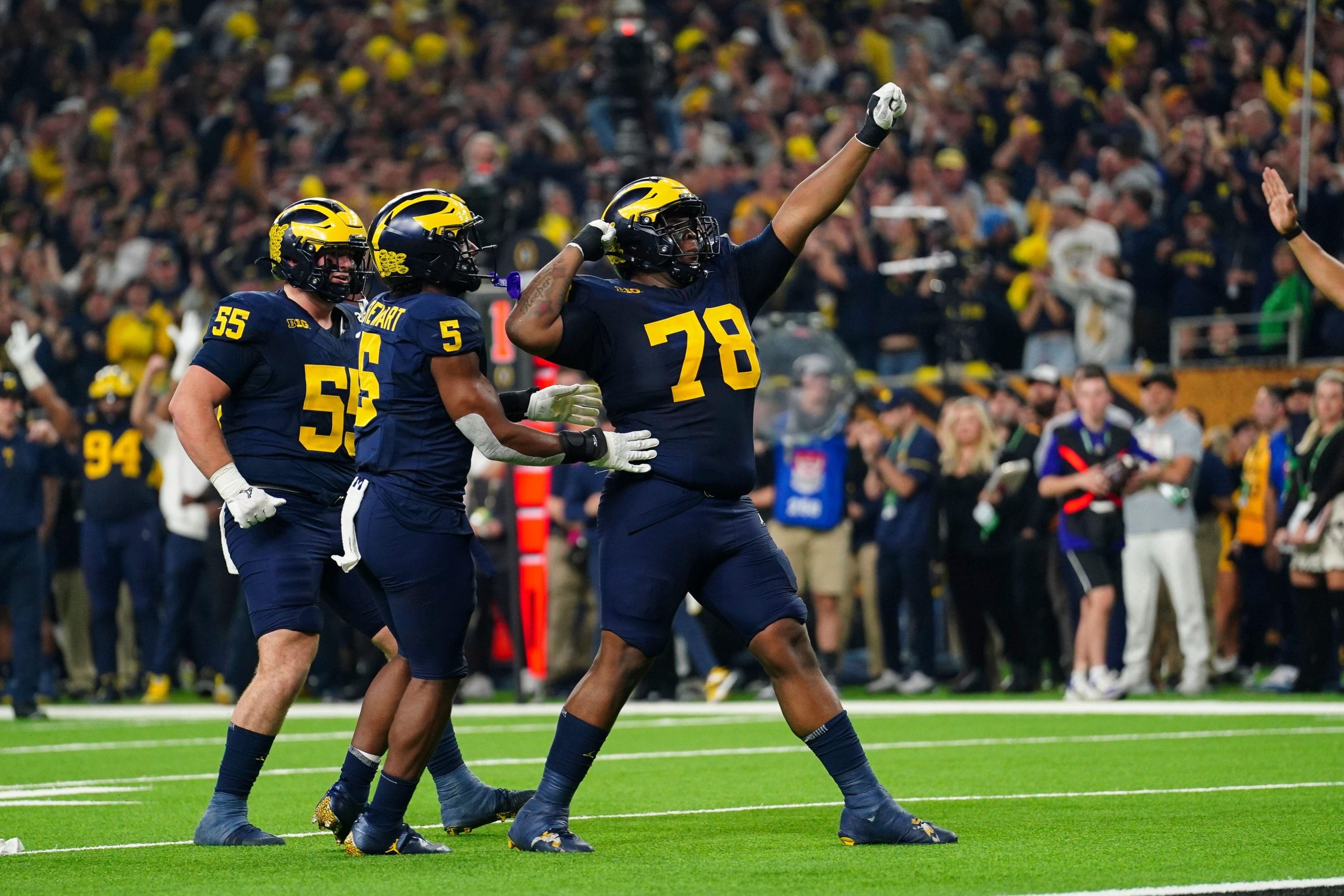
Michigan’s Kenneth Grant stands out as a premier talent among interior defenders. Comparable to NFL star Dexter Lawrence, Grant showcases an impressive combination of size and explosiveness, measuring in at 6-foot-4 and 331 pounds. His stellar 89.5 pass-rush grade places him at the top of his class, making him a significant threat on the field. As he transitions to the NFL, his burst and power will be crucial assets for whichever team selects him.
The Next Great 9-Tech Disruptor: Abdul Carter ⚡
Abdul Carter is positioning himself as a standout edge rusher. With an elite 94.0 pass-rush grade, combined with a remarkable 37.3% win rate, he is perfectly suited for the modern wide-9 technique. His speed and production on the field have drawn comparisons to the dynamic Micah Parsons. Carter’s agility and ability to disrupt plays will be an exciting addition to any defensive lineup.
Inside the Defensive Line Techniques 📊
0/1-Technique: A Clash of Power 💥
While discussing 0 and 1-tech positions, it’s important to recognize their overlap in responsibilities. Players in these roles are typically powerful, capable of collapsing the pocket or stifling the run game. Grant exemplifies what teams desire in this mold, bringing a formidable presence that should not be overlooked.
3-Technique: Versatility and Agility 🚀
The ideal 3-technique player, much like Aaron Donald, is agile, quick, and can create mismatches along the offensive line. Emerging as a potential successor in this role, Michigan’s Mason Graham has showcased his versatility, excelling across various alignments on the defensive front. With a consistent high-level performance, Graham brings a reliable skill set for teams seeking a dynamic interior disruptor.
4/5-Technique: The Battle of Physicality 🏋️
For 4/5-technique defenders, size and strength are paramount. Cam Heyward has long dominated this role through his impressive physical presence and play strength. Similarly, another emerging talent, Jalen Nolen, shows great potential. At 6-foot-4 and 296 pounds, Nolen’s ability to overpower offensive linemen, combined with an impressive run-defense grade, makes him a promising prospect in this category.
Sizing Up the 6/7-Technique Players 🔎
Even though utilizing first-ballot Hall of Famers as templates can set unrealistic expectations, Myles Garrett represents an extraordinary 6/7-technique player. His remarkable blend of size and athleticism allows him to coexist with tackles and tight ends, often dismantling blocking schemes. Factors such as these play into draft considerations, especially for prospects like Stewart, who possess raw talent that, when honed, could develop into a game-changing force.
The 9-Technique Game-Changer: Abdul Carter Revisited 🔥
Finally, we return to Abdul Carter in the context of the 9-technique role, where he can showcase his elite speed and quickness. Possessing a overwhelming 93.4 overall grade, Carter’s ability to penetrate offensive schemes makes him a player to watch. His combination of skill sets bode well for significant impact at the next level.
Conclusion 🎉
Evaluating talent for defensive line roles leading up to the NFL Draft is both an art and a science. Understanding how players fit into their designated techniques can be the difference between success and mediocrity. By spotlighting standouts such as Kenneth Grant and Abdul Carter, teams are provided with insight into the potential game-changers on their radars. As the draft approaches, much anticipation surrounds how these athletes will perform in the league. Defensive line prospects promising explosive play and adaptability remain vital to shaping the modern NFL defensive game plan. 🌟