

Strengthening the Foundation: Building Around NFL Quarterbacks 🏈
The success of a quarterback can often hinge on the support from the team around them. It’s not merely about selecting a star player during the draft; it’s about constructing a robust structure that will aid their development. This year, several NFL teams took significant steps in this direction with their first-round picks. Let’s dive into how some teams made strategic choices to improve the livelihoods of their quarterbacks.
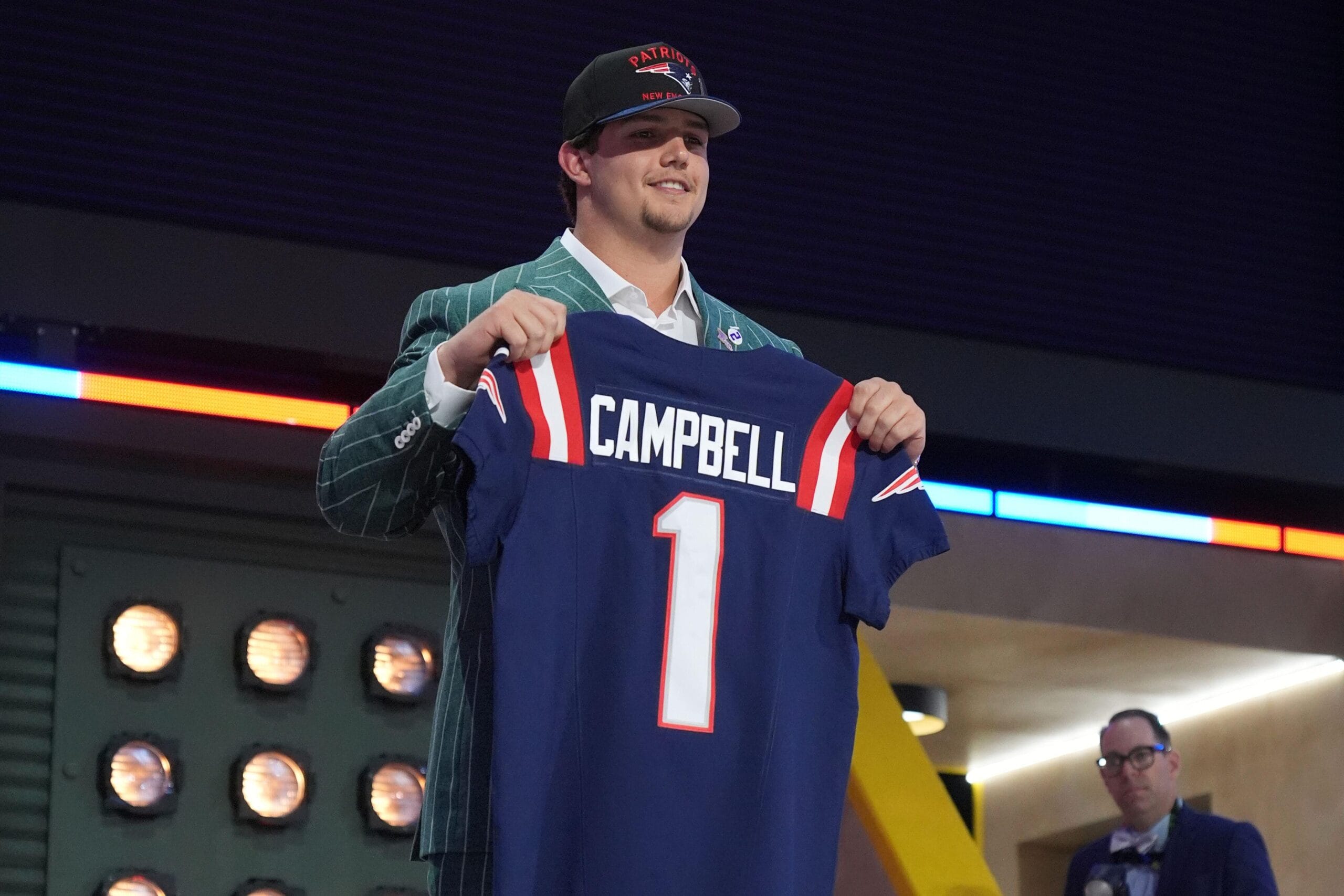
New England Patriots: T Will Campbell, LSU
Last season, the New England Patriots grappled with subpar performance in pass protection, concluding with an alarming team pass-blocking grade of 52.3. This marked them as one of the league's most challenged offensive lines. New quarterback Drake Maye found himself under siege, facing pressure on 37.4% of his dropbacks, placing him among the most harried quarterbacks in the league.
Enter Will Campbell, a dynamic left tackle from LSU, who brings hope for a turnaround. Campbell stepped into the spotlight as a freshman in the competitive Southeastern Conference (SEC) and remarkably did not allow a single sack in true passing scenarios during his college career. His presence on the line could provide Maye with the stability and protection necessary for him to thrive in an increasingly demanding league.
Carolina Panthers: WR Tetairoa McMillan, Arizona
Bryce Young’s performance showed clear improvement during the latter half of last season. He topped the league in big-time throws from Week 8 onwards, demonstrating his ability to deliver spectacular plays under pressure. However, the Panthers’ receiving unit lagged behind, ranking last in the league with many of its wideouts struggling to reach over 500 receiving yards.
Recognizing the need for a game-changing receiver, the Panthers made a strategic decision to draft Tetairoa McMillan, widely regarded as an elite talent in this year’s draft class. Over the last two seasons, McMillan not only racked up impressive statistics but ranked in the top 10 across multiple categories, including targets, contested catches, and yards per route. His acquisition enhances Young’s arsenal and promises to spark a more effective passing attack for the Panthers.
Chicago Bears: TE Colston Loveland, Michigan
In an effort to bolster their offense and provide young quarterback Caleb Williams with essential tools for success, the Chicago Bears have been active in making significant roster adjustments. Having already sought improvements on their offensive line in free agency, the Bears targeted their passing game in the first round by selecting tight end Colston Loveland.
Despite the Bears’ previous investments, the team still grappled with a receiving corps that held the sixth-lowest team receiving grade in the league last season. Loveland arrives with an impressive pedigree, standing out with a remarkable ability to catch passes even amidst less-than-ideal quarterback play at Michigan. Last season, his performance secured him the third-best receiving grade and positioned him fifth in yards per route run among all tight ends in the Football Bowl Subdivision (FBS).
Minnesota Vikings: T Donovan Jackson, Ohio State
Following a substantial investment in their offensive line during free agency, the Minnesota Vikings continued their efforts to protect the newly drafted quarterback JJ McCarthy. Coming back from a significant injury, McCarthy requires a fortified offensive front, which prompted the Vikings to select Donovan Jackson with their first-round pick.
Jackson’s collegiate career reflects his prowess, as he played two full seasons at left guard before taking on left tackle duties for Ohio State. Across 900 pass-blocking snaps throughout three seasons, he allowed a mere three sacks. With Jackson now in the fold, the Vikings have effectively addressed their offensive line needs, granting McCarthy the kind of security he requires to step into his role as a franchise quarterback.
Washington Commanders: T Josh Conerly Jr., Oregon
Following their impressive run to the NFC Championship game, the Washington Commanders emphasized the importance of providing adequate protection for franchise quarterback Jayden Daniels. Already making headlines with their acquisition of Laremy Tunsil through a trade, they further fortified their offensive line by selecting Josh Conerly Jr.
Conerly, who predominantly played left tackle at Oregon, faced challenges with a struggling O-line that allowed him to witness firsthand the chaos caused by defensive pressure. Having allowed just two sacks in the past two years and earning notable pass-blocking accolades, he presents a flexible option for the Commanders. Whether left tackle or guard, Conerly adds depth and versatility, crucial for sustaining Daniels’s performance and longevity.
Kansas City Chiefs: T Josh Simmons, Ohio State
The Kansas City Chiefs faced disappointment in the Super Bowl, largely due to inadequate protection for their star quarterback Patrick Mahomes. Putting him under pressure over 40% of the time was a key contributor to their loss. Recognizing the immediate need for improvement, the Chiefs targeted offensive linemen in the draft and opted for Josh Simmons, solidifying their focus on protection.
Simmons, touted as one of the draft's most athletic tackles, showcases a remarkable collegiate record. Before suffering a season-ending knee injury, he notably allowed just one sack in two years and posted an impressive pass-blocking grade of 82.2. His addition represents a significant step forward in enhancing Mahomes’s security, allowing him to play with the kind of confidence necessary to lead a championship-caliber team.
As the NFL evolves, so too does the strategy surrounding player development and protection. The decisions made during this draft cycle reveal a clear focus on creating a sanctuary for quarterbacks—a vital step towards building a more successful future.