

A Closer Look at the Chiefs' Struggles in Super Bowl 59 🏈
In a stunning showdown, the Kansas City Chiefs were soundly defeated by the Philadelphia Eagles with a score of 40-22 in Super Bowl 59. The outcome highlighted several crucial factors that contributed to the Chiefs' struggles, particularly in their offensive line and handling pressure from the Eagles' formidable defense.
The Chiefs' Offensive Line Woes 😞
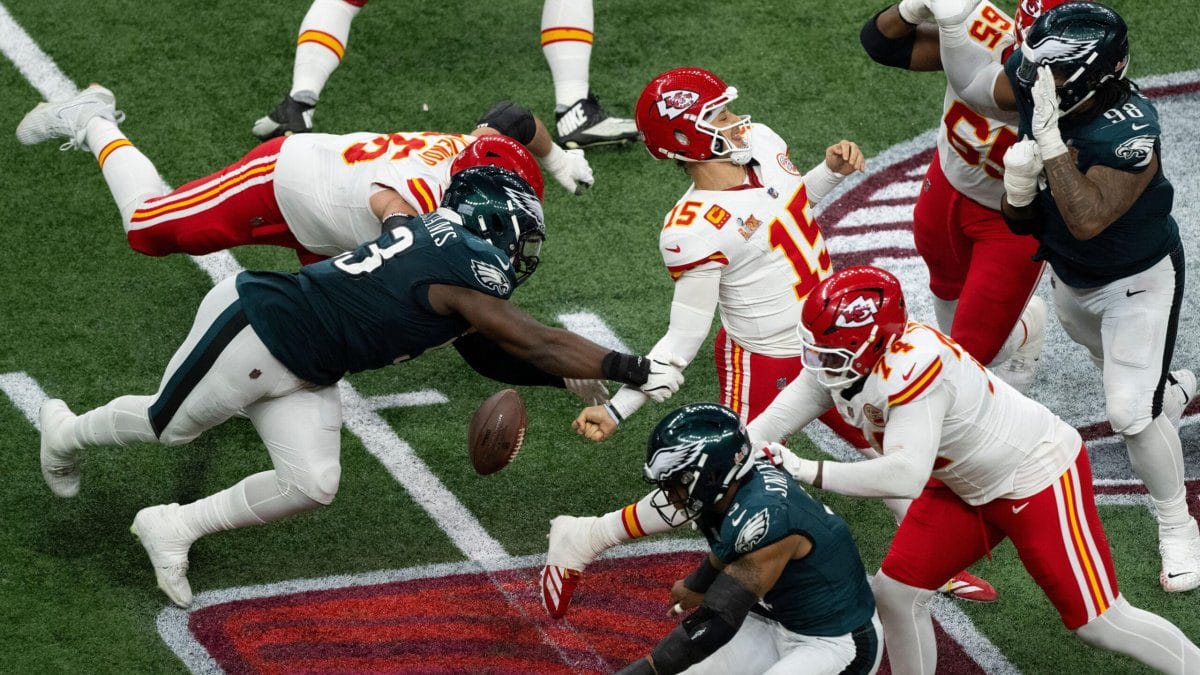
The Chiefs entered the Super Bowl with a significant weakness in their offensive front, which was quickly exposed by the Eagles. Patrick Mahomes, the star quarterback, faced relentless pressure throughout the game. The Eagles’ defensive strategy forced Mahomes to contend with a pressure rate that reached an alarming 40.5% on his dropbacks, leading to a substantial disruption in the Chiefs' offensive rhythm.
Pressure Statistics 📊
The statistics tell the story. Mahomes was pressured on 50% of his dropbacks while the game was still competitive, which was shocking in its own right. For context, this ranks as the third-highest pressure rate he has faced in any game when removing garbage time scenarios. The performance of the Chiefs' offensive line was a significant part of the problem, as left tackle Joe Thuney, left guard Mike Caliendo, right guard Trey Smith, and right tackle Jawaan Taylor all had below-average pass-blocking grades.
Pass-Blocking Grades:
- Joe Thuney: 60.1
- Mike Caliendo: 30.1
- Trey Smith: 49.2
- Jawaan Taylor: 57.3
These poor performances contributed to Mahomes being under constant duress, limiting his effectiveness as the game's progressed.
Eagles' Dominance in Pass Rush 🦅
The Eagles delivered an impressive defensive performance, leading them to their second Super Bowl title. They effectively capitalized on their ability to apply pressure, sacking Mahomes six times, marking a personal record for him in a single game.
Their relentless assault on the Chiefs' backfield resulted in Mahomes experiencing intense pressure for the full duration of the match. This dominating pass rush not only affected his physical presence but also his mental state, leading to costly mistakes.
Consistency Under Fire 🔥
Statistics reveal that Mahomes completed only four out of nine attempts for a mere 48 yards while facing pressure. His struggles culminated in a disappointing passing grade of 59.3 under duress. His biggest completion came late in the game and was a modest 24-yard pass, showcasing how significantly the pressure affected his capability to find open targets when it mattered most.
One of the pivotal moments in the match was his interception late in the first half, thrown while under pressure. The pick was grabbed by Zack Baun and happened right in Kansas City’s red zone, leading to an Eagles touchdown that extended their lead to 24-0 and set the tone for the remainder of the game.
Impact of Constant Pressure ⚠️
Mahomes felt the weight of the Eagles' pressure system particularly throughout the game. He struggled to make decisions and often rushed throws due to the defensive intensity. Even the plays where he attempted to supplement his protection backfired. For example, one of the interceptions he threw resulted from confusion and a lack of internal calm prompted by the fear of being pressured.
The Eagles' strategy of consistent pressure forced Mahomes to hurriedly release the ball, which played into the hands of their defenders and led to self-inflicted errors and turnovers, ultimately giving the Eagles further momentum.
Strategic Effectiveness of the Eagles 📏
Interestingly, the Eagles didn't resort to heavy blitzing. Instead, they relied on their front four to apply pressure and creatively utilized stunts to confuse the offensive line. They functioned within a plan that did not overcommit resources, allowing them to maintain solid coverage. On passing plays, they didn't blitz more than four times, yet they registered an impressive 17 pressures.
Key Statistics of the Eagles' Defense:
- Total Passing Plays: 42
- Blitzes: 0
- Stunts Deployed: 10
- Sacks: 6
- Total Pressures: 17
- Pressure Rate: 40.5%
This approach showcased the effectiveness of sticking to a disciplined strategy, combining powerful front play without compromising their overall defensive scheme.
Standout Performers 🏆
Among the many contributors to the Eagles' success, players like Josh Sweat and Milton Williams shone exceptionally bright on the big stage. Their performances were a significant factor in affecting Mahomes' play and disrupting the Chiefs’ offensive flow. Collectively, they racked up 12 pressures and five sacks during the matchup, making it a financially fruitful game for those who will soon hit free agency.
Williams delivered a crucial strip sack of Mahomes late in the contest, sealing the victory for the Eagles and serving as a metaphorical final blow to the Chiefs’ chances of a comeback.
Conclusion: Lessons Learned 📚
The Chiefs' performance in Super Bowl 59 acts as a reminder of how critical effective offensive line play is—especially in high-stakes situations. Facing a defense that can create chaos and pressure can severely hinder even the most talented quarterbacks. The Eagles’ strategic planning, combined with relentless execution, showcased the power of a sound defensive game plan, leading to a well-deserved championship victory.
As the Chiefs reflect on this setback, there will undoubtedly be valuable lessons to be learned about protecting their star quarterback and rebounding from adversity in the future. 🌟