

A Fresh Look at the 2006 NFL Draft: What If?
The NFL draft often feels like a gamble. While teams dedicate countless hours to evaluating prospects, the reality is that predicting who will succeed at the professional level is incredibly challenging. Imagine how different things would be if teams could draft with the wisdom of hindsight. Here’s a reimagined first round of the 2006 NFL draft, utilizing player performances with available data.
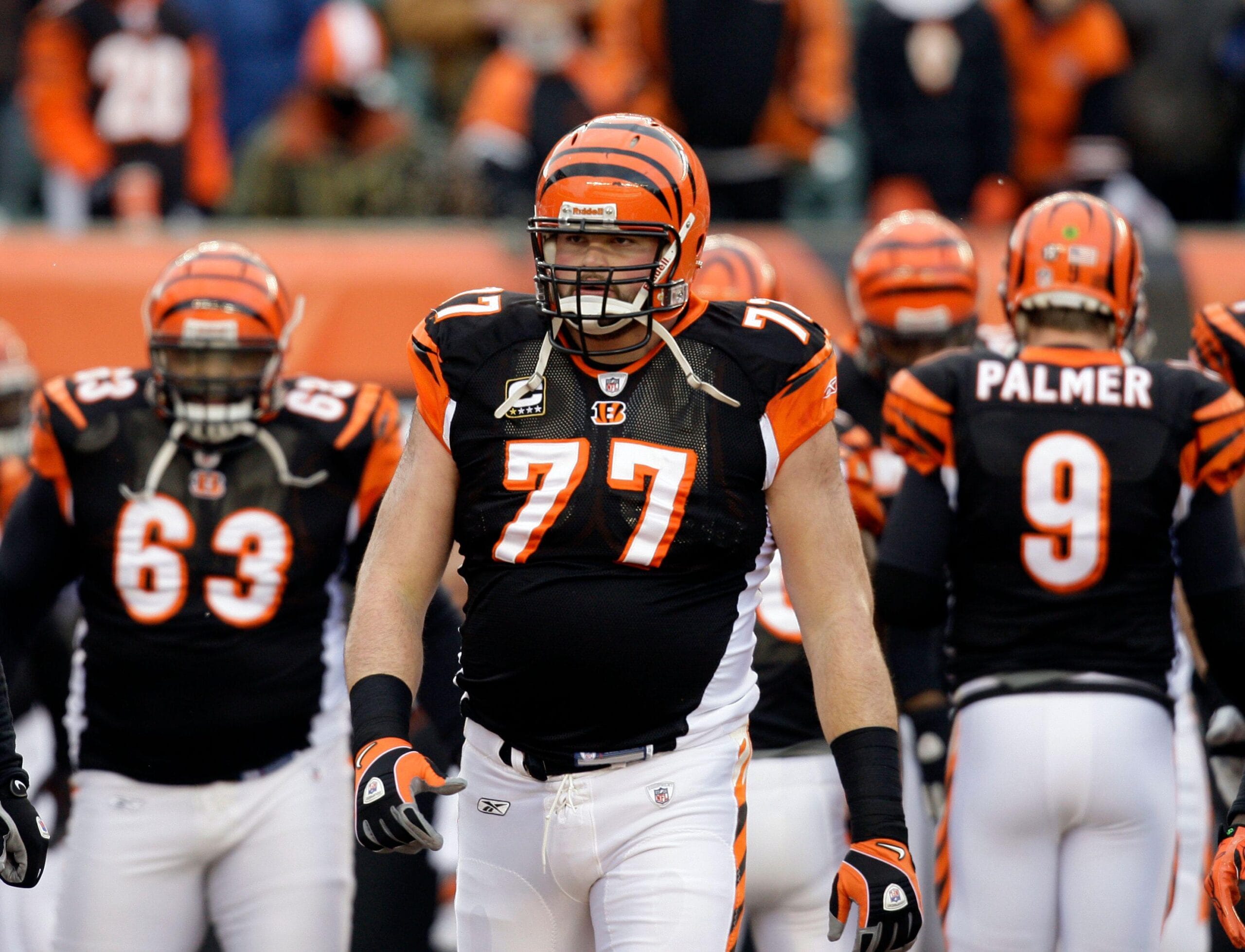
1. Houston Texans: T Andrew Whitworth, LSU (Round 2, Pick No. 55)
The Houston Texans struggled to protect their quarterbacks during their early years. Their inaugural draft choice, quarterback David Carr, was sacked an astonishing 76 times in his rookie season. Selecting Whitworth, a future Hall of Fame left tackle, would have been a game-changer. He achieved a stellar 93.4 overall grade throughout his 16-year career, excelling in both pass and run blocking.
2. New Orleans Saints: G Jahri Evans, Bloomsburg (Round 4, Pick No. 108)
Had the Saints recognized the enormous potential of Jahri Evans, they likely wouldn’t have waited until the fourth round to pick him. Throughout his decade-long career, Evans displayed consistency, earning a phenomenal 93.4 grade during his first four seasons. He provided stability to the Saints’ offensive line until his retirement in 2017.
3. Tennessee Titans: WR Brandon Marshall, UCF (Round 4, Pick No. 119)
Originally selecting quarterback Vince Young, the Titans truly lacked elite receiving options. Marshall, drafted in the fourth round by the Broncos, emerged as a superstar, achieving six Pro Bowl selections and two All-Pro honors. His ability to garner over 100 receptions in six separate seasons underscores what the Titans missed out on.
4. New York Jets: DI Haloti Ngata, Oregon (Round 1, Pick No. 12)
In 2006, the Jets experienced the lowest pass-rush rating and struggled with their defensive tackles. Adding Ngata, a consistent force in the NFL, could have substantially enhanced their defensive effort. His career was marked by remarkable performance, with over seven seasons recording 70.0-plus grades.
5. Green Bay Packers: WR Marques Colston, Hofstra (Round 7, Pick No. 252)
Colston, chosen in the seventh round, quickly flourished, finishing second in Rookie of the Year voting and achieving six seasons with over 1,000 receiving yards. His presence could have given the Packers another prime target alongside their established stars.
6. San Francisco 49ers: C Nick Mangold, Ohio State (Round 1, Pick No. 29)
While tight end Vernon Davis was a notable selection, Mangold’s overall contributions might have made a more significant impact. His incredible 96.1 overall grade over five years and seven Pro Bowl appearances established him as one of the best centers of his time.
7. Las Vegas Raiders: QB Jay Cutler, Vanderbilt (Round 1, Pick No. 11)
Cutler’s NFL career brought highs and lows, but he proved to be a competent starting quarterback who led his team to the NFC Championship Game in 2010. The Raiders, who initially went with safety Michael Huff, would have benefited from stability at the quarterback position.
8. Buffalo Bills: WR Santonio Holmes, Ohio State (Round 1, Pick No. 25)
With hopes high for quarterback J.P. Losman, the Bills needed a standout receiving option. Holmes, the MVP of Super Bowl 42, had a solid start to his career, posting an impressive 88.4 receiving grade during his initial five seasons.
9. Detroit Lions: T D'Brickashaw Ferguson, Virginia (Round 1, Pick No. 4)
While the Lions went 0-16 two years after this draft, strengthening their offensive line would have provided some immediate aid. Ferguson, who earned a solid 86.9 overall grade, would have tallied multiple Pro Bowls and provided support for quarterbacks like Matthew Stafford.
10. Arizona Cardinals: DI Kyle Williams, LSU (Round 5, Pick No. 134)
The Cardinals had a high-flying offense led by veteran Kurt Warner, but better support on defense might have propelled them to greater success. Williams, who made six Pro Bowls and achieved an 81.6 grade over his career, would have bolstered their defensive line.
11. St. Louis Rams: EDGE Tamba Hali, Penn State (Round 1, Pick No. 20)
Choosing Hali would have provided the Rams with a required pass rush. Over his career, he consistently recorded impressive grades, peaking at an outstanding 92.1 in 2010.
12. Cleveland Browns: EDGE Mario Williams, N.C. State (Round 1, Pick No. 1)
The Browns infamously chose defensive tackle Haloti Ngata over Williams, who had a solid career with four Pro Bowl selections. While not the most dominant in terms of overall grade, he still had impressive moments throughout his time in the league.
13. Baltimore Ravens: S Antoine Bethea, Howard (Round 6, Pick No. 207)
Instead of drafting Kamerion Wimbley, opting for Bethea allows the Ravens to improve their safety position. Bethea is recognized as one of the most effective defenders from his draft class, marking three Pro Bowls along the way.
14. Philadelphia Eagles: EDGE Elvis Dumervil, Louisville (Round 4, Pick No. 126)
The Eagles needed defensive depth, which Dumervil provided in his outstanding career—totaling 105.5 sacks and receiving recognition as a two-time first-team All-Pro.
15. Denver Broncos: TE Vernon Davis, Maryland (Round 1, Pick No. 6)
Although the Broncos originally selected Tye Hill, Davis delivered strong performances, making two Pro Bowls and being viewed as one of the top tight ends.
16. Miami Dolphins: CB Johnathan Joseph, South Carolina (Round 1, Pick No. 24)
Switching from Jason Allen to Joseph would have dramatically enhanced the Dolphins' secondary. Joseph achieved an elite grade and made a mark in the league with 32 career interceptions.
17. Minnesota Vikings: WR Greg Jennings, Western Michigan (Round 2, Pick No. 52)
At a time when the Vikings were transitioning at quarterback, Jennings would have been a phenomenal asset. His production included several years surpassing 1,100 yards receiving.
18. Dallas Cowboys: LB DeMeco Ryans, Alabama (Round 2, Pick No. 33)
The Cowboys, who selected Bobby Carpenter, could have bolstered their defense significantly by opting for Ryans, who quickly established himself as a top-tier contributor in the league.
19. Los Angeles Chargers: CB Antonio Cromartie, Florida State (Round 1, Pick No. 19)
Cromartie offers consistency; however, his standout moments truly elevate his career. His Pro Bowl selections depict the talent that led the Chargers to maintain this choice.
20. Kansas City Chiefs: T Eric Winston, Miami (FL) (Round 3, Pick No. 66)
Choosing Winston could have mitigated the shock of Willie Roaf's unexpected retirement. His solid play would have benefited the Chiefs in both run and pass protection.
21. New England Patriots: WR/KR Devin Hester, Miami (FL) (Round 2, Pick No. 57)
If the Patriots had opted for Hester, his unique talent as a return specialist could have provided electrifying plays in special teams, alongside his contributions as a wide receiver.
22. Denver Broncos: S Dawan Landry, Georgia Tech (Round 5, Pick No. 146)
With safety depth questioned, Landry's selection, instead of Manny Lawson, would have solidified this position, as he went on to have a durable career.
23. Tampa Bay Buccaneers: T Donald Penn, (Undrafted)
Initially undrafted, Penn's rise to stardom showcased his capabilities. By early 2007, he became a staple on the Buccaneers' offensive line, solidifying their protection.
24. Cincinnati Bengals: T Willie Colon, Hofstra (Round 4, Pick No. 131)
Colon, selected here instead of Johnathan Joseph, achieved a notable 87.3 grade during his career—projecting as a consistent offensive line player.
25. New York Giants: S Donte Whitner, Ohio State (Round 1, Pick No. 8)
In a move to reinforce the defense, Whitner’s consistent performances and standout run-defense grades would have further elevated the Giants' strong defensive front.
26. Chicago Bears: S Danieal Manning, Abilene Christian (Round 2, Pick No. 42)
With their original selection gone, the Bears would reaffirm their defensive backfield by drafting Manning, who showcased outstanding results early in his career.
27. Carolina Panthers: S Roman Harper, Alabama (Round 2, Pick No. 43)
Harper would have provided immediate enhancement to the Panthers’ secondary, joining a roster that needed reinforcements at safety.
28. Jacksonville Jaguars: RB Maurice Jones-Drew, UCLA (Round 2, Pick No. 60)
Jones-Drew, already a proven asset for the Jaguars, could have been an even earlier addition to solidify their offense and provide vital contributions over the years.
29. New York Jets: T Marcus McNeill, Auburn (Round 2, Pick No. 50)
With a need for additional protection, McNeill’s solid track record emphasizes why he would have been a logical choice instead of the original pick, Nick Mangold.
30. Indianapolis Colts: RB DeAngelo Williams, Memphis (Round 1, Pick No. 27)
Williams would have made a seamless transition into the Colts' backfield, establishing himself as a leading rusher with multiple Pro Bowl appearances.
31. Seattle Seahawks: CB Brent Grimes, Shippensburg (Undrafted)
The Seahawks missed an opportunity by not selecting Grimes, who transformed from undrafted rookie to an elite cornerback.
32. Pittsburgh Steelers: CB Tramon Williams, Louisiana Tech (Undrafted)
Williams would provide a valuable addition to the Steelers’ deep secondary, adding his experience and knack for creating turnovers.
By exploring how the 2006 NFL Draft might have unfolded differently, fans can envision a newly-energized landscape in the league filled with various "what-ifs." This exercise highlights the unpredictability of drafting and celebrates the talents of these athletes. 🏈✨